People Make Clothes
A Conversation with Sofi Thanhauser


Hello precious people,
We have now closed submissions for Issue No. 6, Deep Beauty, and were quite speechless and overjoyed by how many of you answered the call (so many!), and by the beauty of ideas we received. Thank you so much to everyone who sent something in. We know that the selection process will be hard, and, as always, a little heartbreaking, but we aim to be in touch with all contributors by the end of the month or latest at the beginning of next.
A small update: from April, our membership will become more defined as a way of grounding our work more firmly in the community it grows from. The opening reflection of each newsletter will remain freely accessible, as will a portion of our essays and interviews, with full versions becoming part of the member layer, allowing us to go deeper in every issue. All the details are on our about page, if you’d like to take a look, and you can → subscribe here.
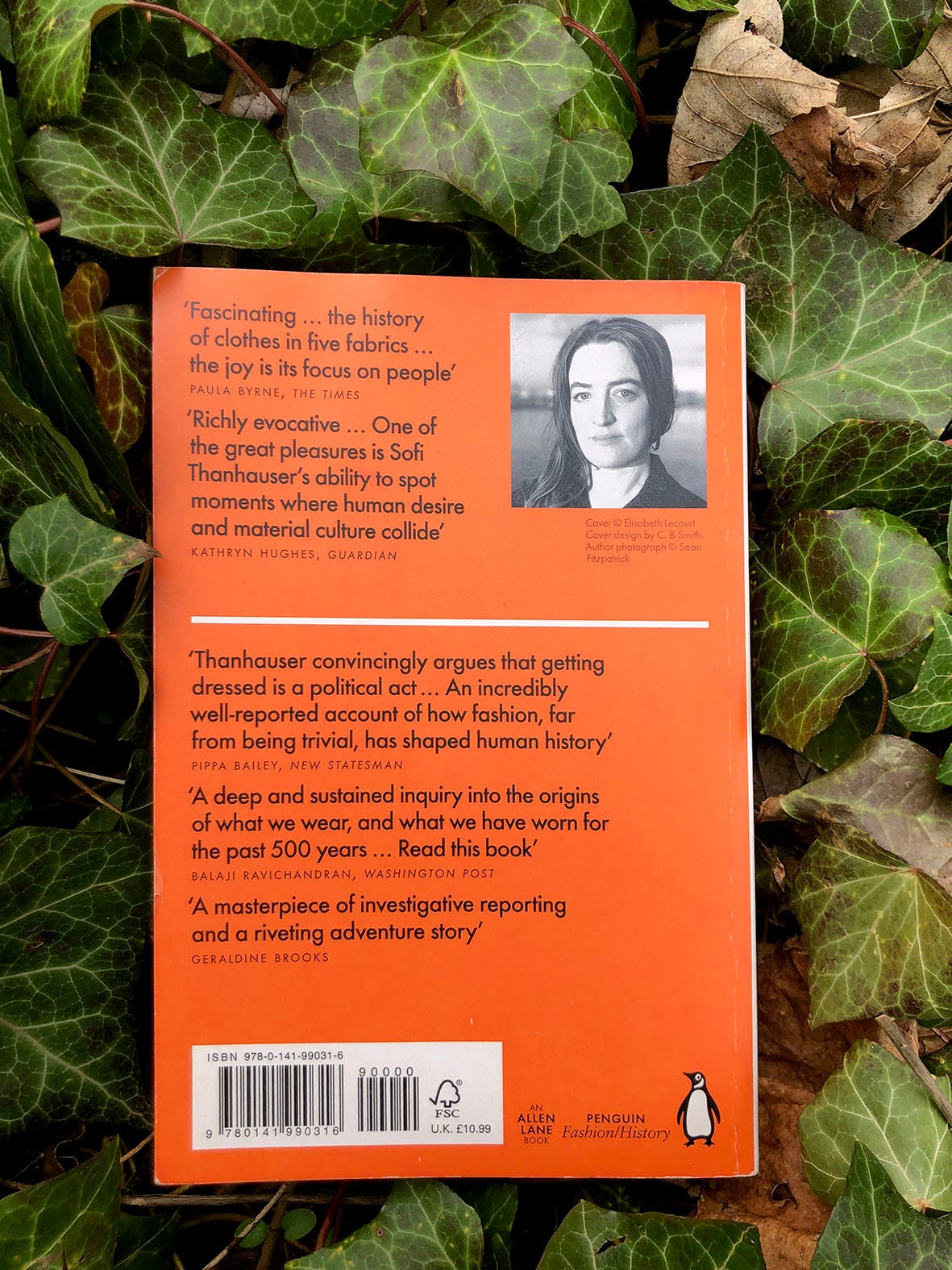
So, people make clothes. But they also make meaning, connections and ways of seeing the world differently. This month, Liz speaks with Sofi Thanhauser, author of Worn: A People’s History of Clothing, about taking clothing seriously as a lens onto the systems we inhabit: research, grief, synchronicity and the radicalism of those who believe things can be made otherwise.
Sending much love,
Dörte
xx
THE BOOK OF KIN presents:
Matthew Cox
Based in: UK
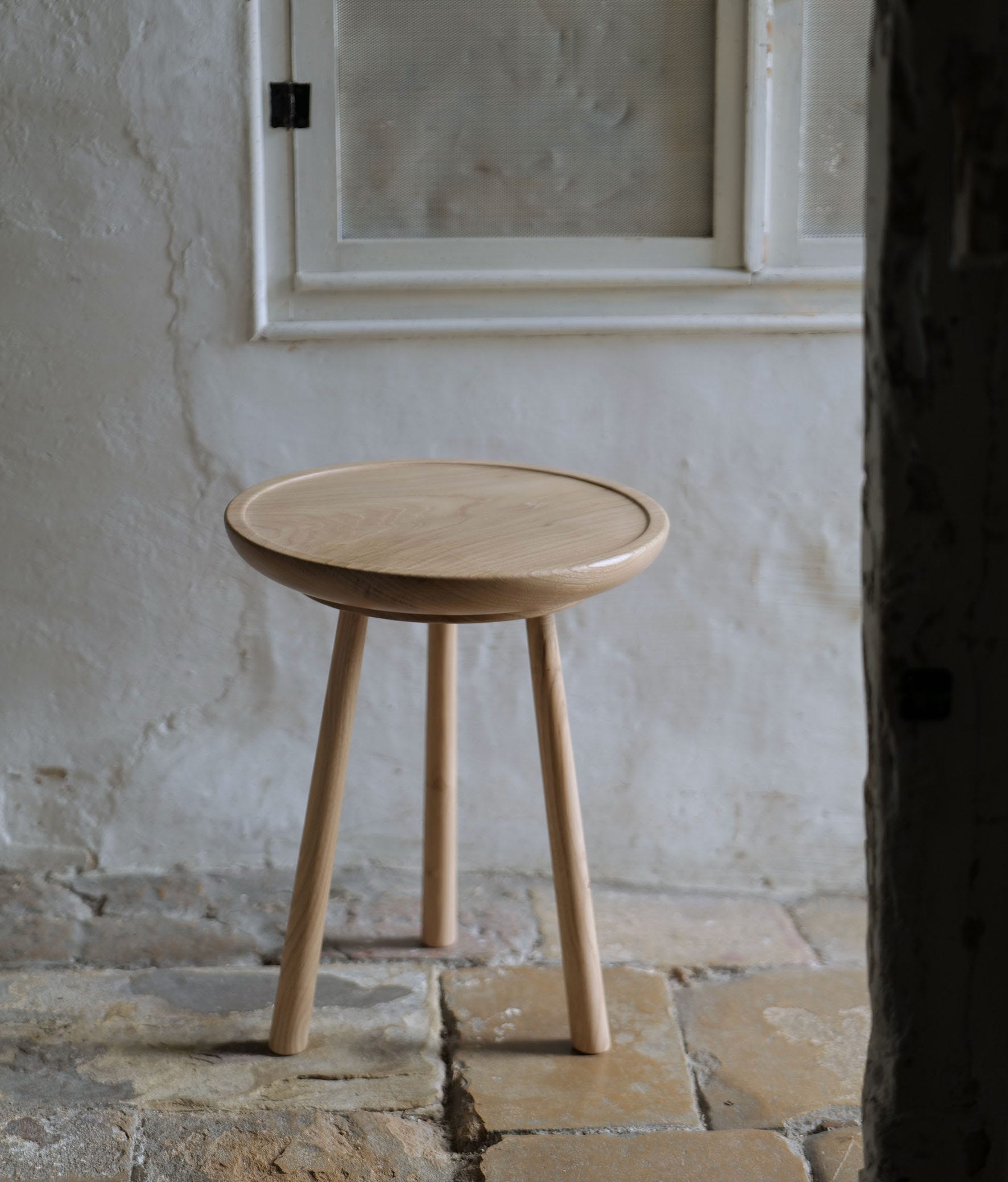
Every piece of furniture begins with a tree. That fact, so easily forgotten in the seamless surfaces of contemporary interiors, sits at the centre of Matthew Cox’s practice. Their new Milk Table collection is crafted from British chestnut, elm, and sycamore – timbers that are rarely seen in furniture today, despite growing on our doorstep.
The tables draw inspiration from early dairy stools: three-legged, stable and turned from native wood. Each is made individually before being offered for sale, so that the particular grain, variation and character of each piece can be appreciated before a choice is made. Nothing is uniform or repeated.
A certified B Corp, Matthew Cox designs with a hundred-year horizon, making things beautiful and enduring to honour the material they came from.
www.matthewcox.com / @matthewcoxetc
People Make Clothes
A Conversation with Sofi Thanhauser
By Liz McLellan
I first encountered Sofi Thanhauser as the author of Worn: A People’s History of Clothing, which traces the fabrics of our world and the human lives thrown asunder by the conquests of colonialism and capitalism. She is also, however, a musician, visual artist and Adjunct Associate Professor at Pratt Institute, living and working in Brooklyn, New York. While clothing has clearly planted itself as a tendril of curiosity and enchantment in her life, she pairs that fascination with serious journalistic rigour and a commitment to structural change.
Perhaps what the book does most powerfully and adeptly is lay bare an interconnected web of materials and socio-economic machinations. We are left with the sense that our world has a single living heartbeat and that we cannot, in fact, distance ourselves from it, as the fast-fashion industry would lead us to believe. Like shining a flashlight on a spider’s web at night, we suddenly see each previously obfuscated thread of connection. The web reveals the accumulation of wealth to be at the heart of social, political, cultural, health and ecological unraveling – a system in which profit is spun from extraction and every thread pulls tight somewhere else.
From this illuminated perspective, a deeply emotional world of grief and anger pulses through stories of disenfranchisement. We cannot look away. Yet Sofi also introduces hope, guiding us towards vital stories of revival unfolding in unexpected places.
Materially, the book moves from linen to silk, synthetics, cotton and wool: each fibre offering a lens into global trade histories, agricultural systems, labour struggles and the waves of industrialisation that reshaped them. Sofi’s writing weaves together primary archival documents, environmental research, first-person reporting and economic analysis. The depth of her thinking on a subject that, in today’s media landscape, has often been flattened into greenwashing catchphrases entirely reframes how we think about clothing.
I had the opportunity to speak with Sofi about the book, her research practice and what clothes mean to her.
Liz: How do you navigate the tension between approaching clothing through a research and history lens while also engaging with the urgent, solution-driven conversations happening around it today?
Sofi: I think I’m really glad to be able to participate in a conversation that I felt for some time wasn’t happening – and still isn’t happening at the level that it should be. But I do feel there are little fires burning in a lot of places, with people actually starting to look more deeply at what’s happened with clothing.
So on the one hand, writing this book has put me in touch with people who are doing really interesting, thoughtful work, either making clothes or thinking seriously about them. That’s a pleasure, because it’s fun to talk about such a big problem with people who are thinking about it seriously.
Also, it’s been a chip on my shoulder for quite some time – since before writing the book, during writing the book and after writing the book – that inherently there’s this way in which discussion of clothing is dismissed as being unserious, or it gets feminised and thought of as fundamentally anti-intellectual. That’s been a hobby-horse of mine for a long time. So it’s a blessing to be put in touch with people who understand: people you don’t have to explain the connection between the garment trade and imperialism to, for instance.
I’ll give you an example. A colleague of mine wrote a really interesting book recently about the U.S. Special Forces and the heroin trade, which is a subject that I see as completely parallel with a lot of the connective threads of the garment trade. One of the stories I tell in my book is about the U.S. and Honduras: there are a lot of connections there. Yet two different editors I’ve pitched a review of that book to said: “Sounds like an interesting book, but you’re the clothing lady. You wrote the book about clothes. Why should you write about the U.S. military?” So on certain levels of the media, outside of this niche of more interesting work happening, there is still this persistent idea that writing about clothing means writing about an unimportant cultural artefact.
Liz: Yes, as though it exists in its own world, rather than being connected to the systems we inhabit. I think that’s something your book does so well: it connects clothes to the workings of the systems we live within. Nothing happens in isolation. Everything is linked, and there are deep, intricate reasons why things unfold as they do.
Sofi: Totally. I think that’s really well put. And I think there is a very active mechanism in the media that de-links those things daily: separating politics from the objects of everyday life, which is kind of crazy-making for everybody.
Liz: In many sustainability conversations it feels as though brands are offering a “greener” version of the status quo, encouraging people to keep consuming, just from the perceived right sources. From your research, what concrete changes would you urge brands or producers to make if they genuinely want to transform how clothing is made?
Sofi: Probably the most important thing would be unionised labour forces. It depends on the scale people are working at. If it’s three guys in their basement, then just keep doing what you’re doing. I hope you can find health insurance, and let me try to tell everybody about you.
But in terms of making claims – a big company that is producing overseas and making any kind of claims about workers’ rights: if they’re not working with a labour union, or if labour isn’t providing the data on the ground about how things are going, then I kind of lose interest.
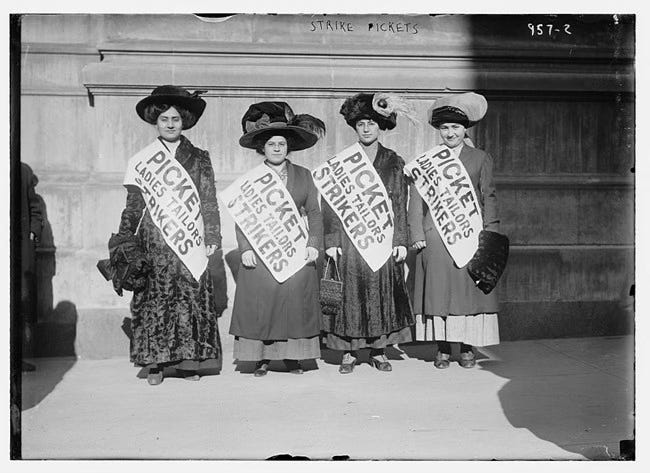
Any legal instrument that can create actual accountability for the brand in its relationship with the subcontractor and the work is critical. Otherwise there’s actually no need for the brand to avoid killing people. So that kind of legal instrument, plus worker-provided data, would be the two basics in my mind.
And then the claims around environmental impact are much harder to unpack. In the U.S. there’s nothing really approaching governmental legislation, as far as I’ve seen. But there are things happening in France, which is cool to see. It is possible to legislate around environmental impact in meaningful ways. At least we know that it’s not impossible. It’s actually pretty simple.
Liz: Whether digging into the practices of specific brands, or researching for your book, how did your research approach take shape? How do you decide which threads to follow and where to look for information?
Sofi: By the time I started doing archival research or reporting for this book, I had already gathered a ton of data simply by spending time in thrift stores, as someone who enjoys them. I often think people are led by interest or desire into gathering troves of data that are more comprehensive than what most researchers ever collect.
I wrote an article years ago about squid. I was trying to gather information about squid in the Cape Cod area and was speaking with research scientists at Woods Hole Oceanographic Institute. Their data was much less robust than fishermen’s data, because they go out once a month and the fishermen are out there every day.
Our interests can drive us to accumulate information. Mine drove me to accumulate enough information to become curious about certain things: touch and fabric type, construction, cuts and styles. After that came looking at labels, countries and union labels, and starting to wonder why a particular moment of shoulder pads was always made in Korea, trying to draw a connection between American mass-produced garment styles and foreign policy.
Once I started to develop that interest, I was led to academic books and articles. Academic writing can almost be biased against narrative. It’s out of style to tell stories. So, it can be difficult to wade through some of that material. But historians, sociologists and anthropologists have done a lot of meaningful work that can be accessed. I’m fortunate enough to have access to JSTOR, which is a great trove.
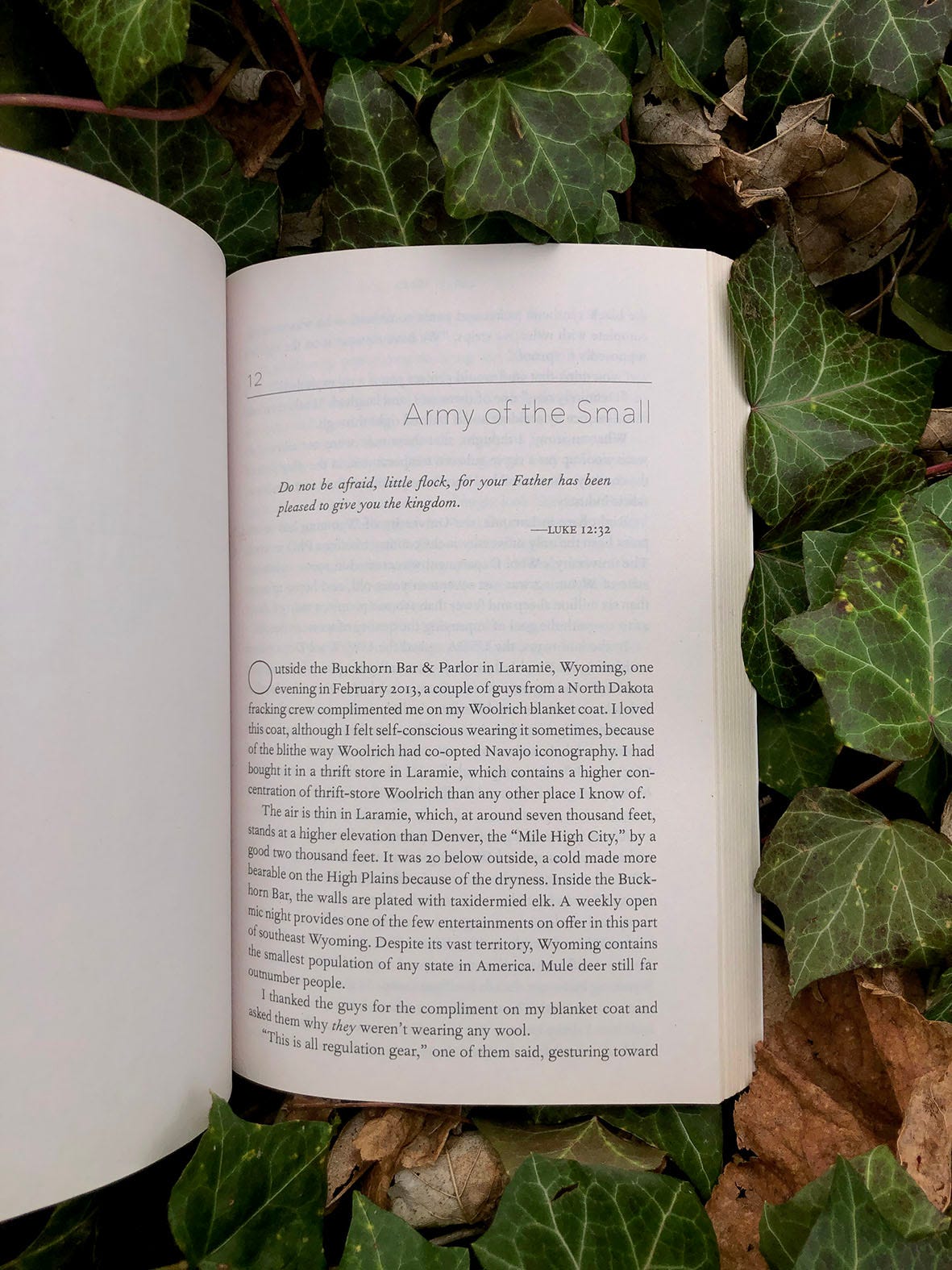
And then, in terms of my more active journalistic process, that was really led by trial and error and synchronicity. A lot of the time I had incredible experiences with synchronicity. I was doing an MFA in creative writing at the University of Wyoming and went to apply for a travel grant through the school to go to China. I asked one of my professors – who was a GIS specialist and taught in environment and natural resources – whether he would write me a recommendation for the grant.
He said, “You could go to China, but I’m from southern India and all my childhood friends are textile industrialists now. So do you want to just go there with me instead?”
And I was like, yeah, I do.
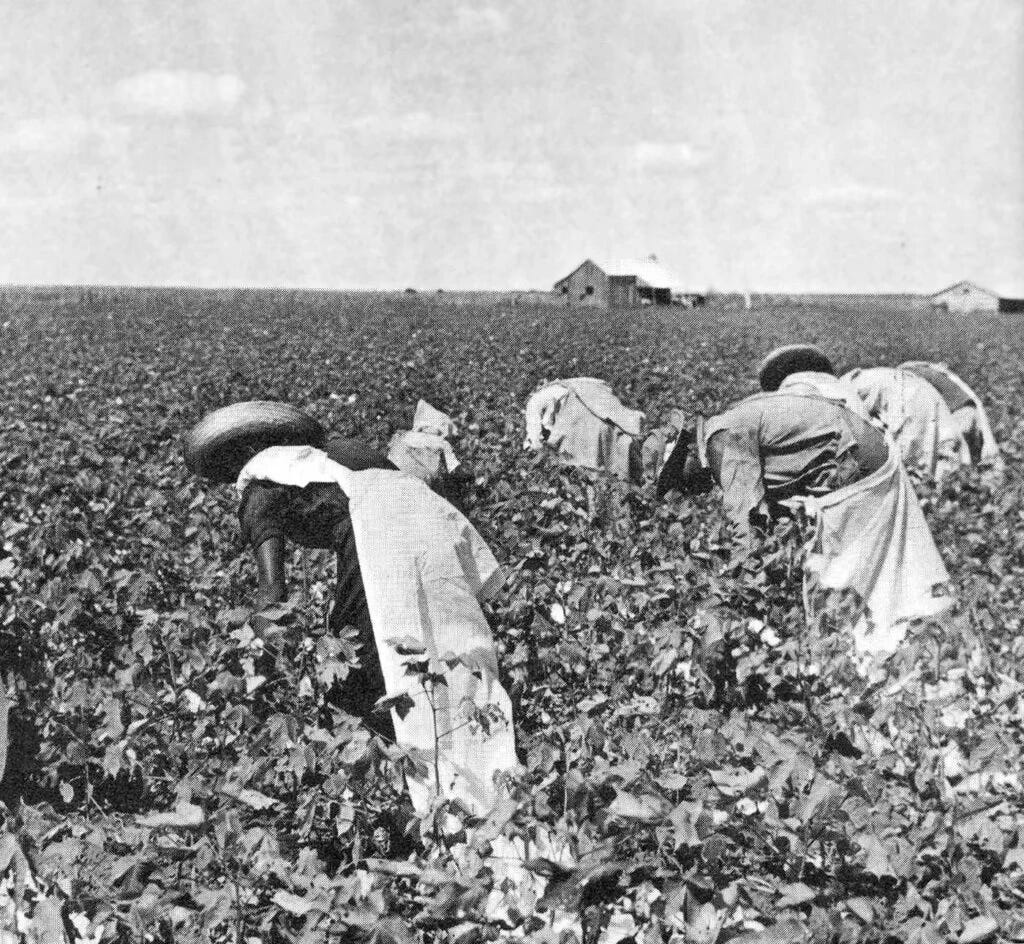
So that was amazing. Without him, I could never have seen Tamil Nadu in the way that I saw it. Then years later, after I had a book deal and received an advance that allowed me to travel to China, I happened upon a family friend who had spent time there. She lives in New York. I think she used to be a buyer for Bill Blass. I met up with her to interview her, and she invited me to China. So that too was amazing synchronicity.
And then in Honduras, I was beating my head against the wall because I had no entry point, but that was interesting in its own way. I had a labour union guy who just never showed up a couple of times. I didn’t even know how to interpret that. Different people later gave me different interpretations of what it might have meant. Sometimes I just have to accept that I’m going to be in the dark about a situation.
Liz: I think that’s often the nature of how you actually make connections with people, which tends to be the best way to get things done and do them well. It was also one of the most striking parts of the book for me: when you write about your experience speaking with farmers in India. It’s profoundly emotional and devastating to read.
Sofi: I definitely felt, and still feel in my current project, that my emotional body travels with me when I’m recording. I don’t know how other people do it, but I get personally very affected.
Liz: How does that translate into your writing process? What is the flow between emotion and analysis in your process?
Sofi: My ideal for a text that’s going to be brought before others is that it not be haphazardly riddled with my own emotions.
An immense amount of anger went into writing the book. In some ways, I was relieved of some of it by writing it. I felt really angry and had something I needed to say. And then I said it, and I did feel less angry. But I didn’t necessarily want to say it in an angry way. I also felt a lot of grief around many parts of the book. But I didn’t want it to be a book saturated with grief.
Liz: How does that translate into your teaching practice when dealing with issues that are steeped in those emotions? With the state of the environment and the textile industry as they are right now, it can be easy to reach a point where you feel quite hopeless. When you’re teaching and trying to transmit knowledge, how do you engage people in a way that empowers them to act rather than leaving them paralysed by grief?
Sofi: I have a funny relationship with teaching. I do teach at Pratt, but I generally don’t teach subject matter that directly relates to the book. I teach a graphic novel class and a class about creative writing pedagogy for children. I also teach a class called Fabric Book, which is probably the most closely aligned with Worn: A People’s History of Clothing. I assign Women’s Work: The First 20,000 Years to my students, which I think is a really wonderful book.

The whole class is organised around making things. The first assignment is to make a loom. I don’t say how to make a loom. Honestly, I don’t know if it’s good pedagogy or not. I just tell them to figure it out – make a loom. And they all do. Some are very standard, some are really weird. The next assignment is to weave a story. It’s a strange prompt, but they all find a way to do it.
I think most students take the class partly because they really miss touching things. Many of them are graphic design students, animation students or creative writing students. They don’t often get opportunities in their coursework to make things physically. When I ask why they’re taking the class, almost all of them say that’s what they want. So for me it’s a very gratifying position to be in: enabling people to make things.
I think of myself more as a facilitator than a pedagogue. Maybe that’s because I get that out of my system in my writing. In a room full of young people, I don’t want to talk at them. It’s ironic, because my favourite classes in college were lectures where someone just talked at me for a couple of hours. But the way I tend to run things is much more communal and participatory.
Liz: It takes people out of receiving mode and into creating mode, which I think is really nice. There’s a balance between those perspectives: taking in knowledge, developing a critical perspective, and then doing something with it. The ability to shift into the creator mode, which can be a challenge.
Sofi: Often the students who are most engaged in their own process and their own work – those who are taking their artistic practice most seriously – are also the most generous and thoughtful when they consider other people’s work, because they know what it takes to make anything. They’re primed to be more receptive and attentive.
The students who are kind of phoning it in on their own creative work, on the other hand, are often very critical of others and very willing to dismiss things wholesale without examining them very thoroughly.
Liz: That’s so interesting. There’s this idea that the things we reject in ourselves are the things we reject in other people. When someone stifles their own creativity, the fear beneath it often sharpens their criticism of other people’s attempts to be seen.
Sofi: Indeed. When I was working on Worn, one of the things that struck me most when interviewing business people, whether from small companies or large ones, was how much their own way of practising their craft or running their business shaped how they saw reality.
The people who were doing things that were a little more radical, and informed by a belief in a different kind of future, were very awake and alive to the possibilities happening everywhere around them. Whereas the people who felt very constrained by market forces and focused on their bottom line often couldn’t see those things at all: that whole realm was invisible to them.
So I had to think about that for myself too. What am I tuning into at any given moment?
Recently I’ve also been thinking a lot about the way information moves. One of the things that having regular interactions with 19-year-olds has done is make me more aware of information networks and how people speak to one another outside the systems we’re increasingly directed towards through highly monetised, heavily surveilled online interactions.
Liz: What are your thoughts on sharing information and information networks as activism on Instagram? It’s something I’ve seen happening a lot, in ways that are both interesting and also quite limiting.
Sofi: Yes. I was recently reading about a radical architectural collective called Ant Farm. They were doing a lot of architectural and theatrical interventions, and eventually committed to more media-based work: both commenting on the media and trying to create alternative media networks.


There was a quote from one of them that I found really interesting about how alternative information circulating through traditional channels is never going to work. We need alternative channels.
On TikTok, for instance, the incredible creative work of millions of young people is just being mined by a large company. That’s strange to me. It’s like social interactions themselves are being mined. That reality is haunting me.
Liz: Mining is a really rich framework for thinking about it. It is connected to the material realities of mining, as relates to our digital world.
Sofi: They’re so connected. The mineral resources that go into producing any film are unbelievable. And that’s before even getting into the energy involved in these online attractions that seem so weightless but actually have very serious material counterparts out there.
Liz: It’s interesting because I feel there was a moment around AI when people suddenly became aware that digital things have a physical impact. We hadn’t really thought about that before, which is kind of wild.
Sofi: It was an interesting moment where that surfaced in a real way for people: “oh, this is an immense drain on water and energy. What do we think about that?”
I’m old enough to remember what it was like before social media and cell phones. Just rediscovering the pleasures of company, of spending time with people, of having a party, of actually meeting people through other people, of getting information that way. If I’m in a new city, for instance, I might use the internet to figure out where to eat. But I’d much rather find out through someone. If I find a good restaurant, I’m going to ask the waitress where else is good.
I like those kinds of networks. I find them more reliable and absolutely more pleasurable too. So yes, to your point: we’re still here, people are still here, we can still talk to each other.
Liz: It totally changes the emotional relationship to the experience of where you are: the ability to just be present with what you’re doing, as opposed to feeling that there are a million options out there and you need to experience all of them. Do you have any particular projects or developments that are making you feel hopeful right now?
Sofi: In my writing I’m working on a quite different set of histories and materials. I’m writing about houses, actually, which are connected in many ways, but it’s a different field of inquiry. I have my eye on hemp and flax and, to a certain extent, I keep being drawn back into conversations happening in textiles.
Last October I went to Venice to speak at a sustainable textiles conference and met some really interesting people. There was a woman there from Italy’s last surviving factory producing a non-synthetic lining material. She shared a bit of her story with me.
I was also working a little with Oregon State and their Canvas Research Institute, because they’re interested in trying to build hemp supply chains. That was a little dispiriting at first, though it’s not over yet. It’s just not clear whether the market, as it’s currently configured, will reward domestic fibre production because of processing bottlenecks. At a conference Oregon State organised with a few brand representatives, they were very direct. They said: “Look, customers don’t care if the material is from the U.S. or not. You need to give us a better reason to buy domestic. Is it better performing? Is it cheaper? Then we’ll talk. Otherwise we can’t make money from that promise.”
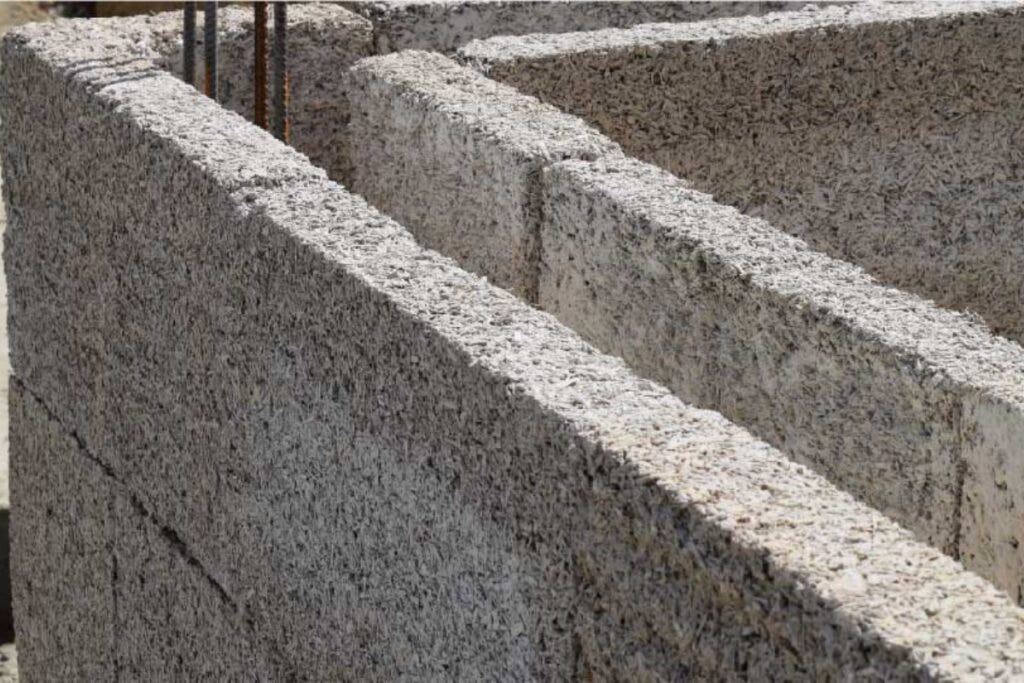
But on the other hand there are promising uses for hemp in building, in hempcrete, for example. And yet, no miracle material is going to fix anything. It’s about how things are integrated into systems, and whether those systems work for the environment and for people.
But that being said, I think it’s a cool plant – and a cool project.
Liz: There are some interesting hemp and linen projects happening in Canada too. The CEO behind Eliza Faulkner has started a company called Canflax, working to rejuvenate the flax production industry there.
Sofi: That’s cool. That’s always an interesting thrift-store find – when you see a “Made in Canada” label. I’ve seen some interesting hemp and linen pieces made in Canada, and there’s always good wool. Although I spent ten years working on this book, there are still infinite other cool stories out there that I don’t know about. And I love that. I love that there are so many things I still don’t know.
A couple of years ago, I was in Hungary and spent a lot of time in Hungarian thrift stores. There’s this whole Soviet-bloc world that I had never gotten into before. It’s super fascinating. You see a lot of “Made in Poland” labels, for instance, and you start thinking about how a similar story of deindustrialisation happened there, but with its own particular flavour.
Liz: What’s your current approach to, and your personal relationship with, clothing? Are you still a thrifter? What kind of clothes do you like to buy and wear?
Sofi: Yes, I’m a thrifter for life. It’s something I really enjoy. I think it’s one of the main ways I relax.
This doesn’t happen anymore because I don’t live within walking distance of a thrift store, but when I was living in Laramie and working on my thesis there were times when I would arrive at a thrift store and think, “Wait, how did I get here?” It was almost like muscle memory: something that would override everything else. If I was hungry, or had to pee, or was irritated, all of that would disappear. I’d walk into a thrift store and all my needs would be suspended for at least 30 minutes. I’d just be pleasantly engaged.
Liz: I know that feeling very well.
Sofi: Yeah. There are a couple of things I’ve gotten into recently: wool, specifically merino wool undergarments. That’s a new one for me. I’m completely sold on them personally. Where has this been all my life?
Liz: Are there other books that have informed your thinking, or that you’d recommend?
Sofi: I mentioned Women’s Work: The First 20,000 Years. I think that’s a classic, it offers an interesting perspective and it’s very accessible.

I also recently discovered a book I think is really fascinating. I can’t believe it took me so long. It’s called The Grand Domestic Revolution by historian Dolores Hayden. It’s about 19th-century feminism and the focus on collectivising housework. Basically, these women were saying: unless we have collective kitchens for whole communities and collective childcare, nothing is going to work for women.
Her argument is that this was the central feminism of the second half of the 19th century, and it’s largely been forgotten. I had never heard about any of this, which was astonishing to me as someone who takes an interest in 19th-century feminism.
And I recently visited an old Shaker village – have you heard of the Shakers?
Liz: Oh yeah.
Sofi: That was mind-blowing, because they had water-powered laundry systems. Individual women used to spend entire days doing laundry by hand, but the Shakers organised it collectively with water-powered machinery. Women had a lot more time on their hands. That’s part of the story Dolores Hayden is telling.
Liz: If people haven’t read your book yet, is there a takeaway or some kind of foundation you think is important for people to understand about their relationship to clothing and textiles today?
Sofi: People make clothes.
Sofi Thanhauser writes about global history and politics. She is the author of Worn: A People’s History of Clothing (Pantheon, 2022), with a second book, Shelter, forthcoming from Riverhead. Alongside her writing, she works as a multimedia artist with language, image, song, textile, video and performance. https://sofithanhauser.com