Move Slow and Build Things
Learnings from Porto: How collaborative ecosystems, independent storytelling and slow businesses can support one another


Hello Precious People,
As mentioned in last month’s newsletter, this month I’m sharing a travel reportage and reflection following a recent peer-learning exchange in Porto with Miguel and Alice from Barbot Bernardo and Saber Fazer, which I was invited to take part in through the European Creative Hubs Network. Thanks to their support, who made this exchange possible, this month’s newsletter is freely available to everyone.
The experiences of the week kept circling back to one question: what allows meaningful, small-scale cultural work to endure?
From neighbourhood initiatives and educational programmes to makers, publishers and collaborative forms of organising, I encountered many people patiently building the kinds of structures that allow slower, values-led work to survive and support one another. At the same time, many spoke openly about the growing pressures their ecosystem faces.
I have returned to Porto various times throughout the last two decades, and for me, this harbour city in Portugal’s north has always held a special kind of magic. My first visit was in 1999, staying with a friend whom I had met whilst living and working in London as an au pair the year before. Back then, the city had a gloomier charm, and tourists were still few and far between. In the years that followed, I witnessed Porto become increasingly international, slowly turning into the vibrant cultural hub it is today.
What I always loved was the openness of its people: welcoming, real and very down to earth. Over the years, I had the great fortune to meet some wonderful creatives and become acquainted with their work.
I have returned to Porto various times throughout the last two decades, and for me, this harbour city in Portugal’s north has always held a special kind of magic. My first visit was in 1999, staying with a friend whom I had met whilst living and working in London as an au-pair the year before. Back then, the city had a gloomier charm, and tourists were still few and far between. In the years that followed, I witnessed Porto become increasingly international, slowly turning into the vibrant cultural hub it is today.
What I always loved was the openness of its people, welcoming, real and very down to earth. Over the years, I had the great fortune to meet some wonderful creatives and become acquainted with their work.
In 2024, after not having been in Porto for several years, I decided to return and reconnect. I had a special story in mind for our current print issue, The Lissome No. 5, Rise Up Rooted Like Trees. Ten years earlier, I had met Alice Bernardo and her project, Saber Fazer, and she had been one of the first initiatives I connected with after founding The Lissome. I had followed Alice’s work over the years and felt inspired by how it had evolved from a personal research project into a certified vocational education and training provider focused on natural textile and fibre production and processing – as well as into a financially sustainable business doing important work for the common good.
Continue the journey:
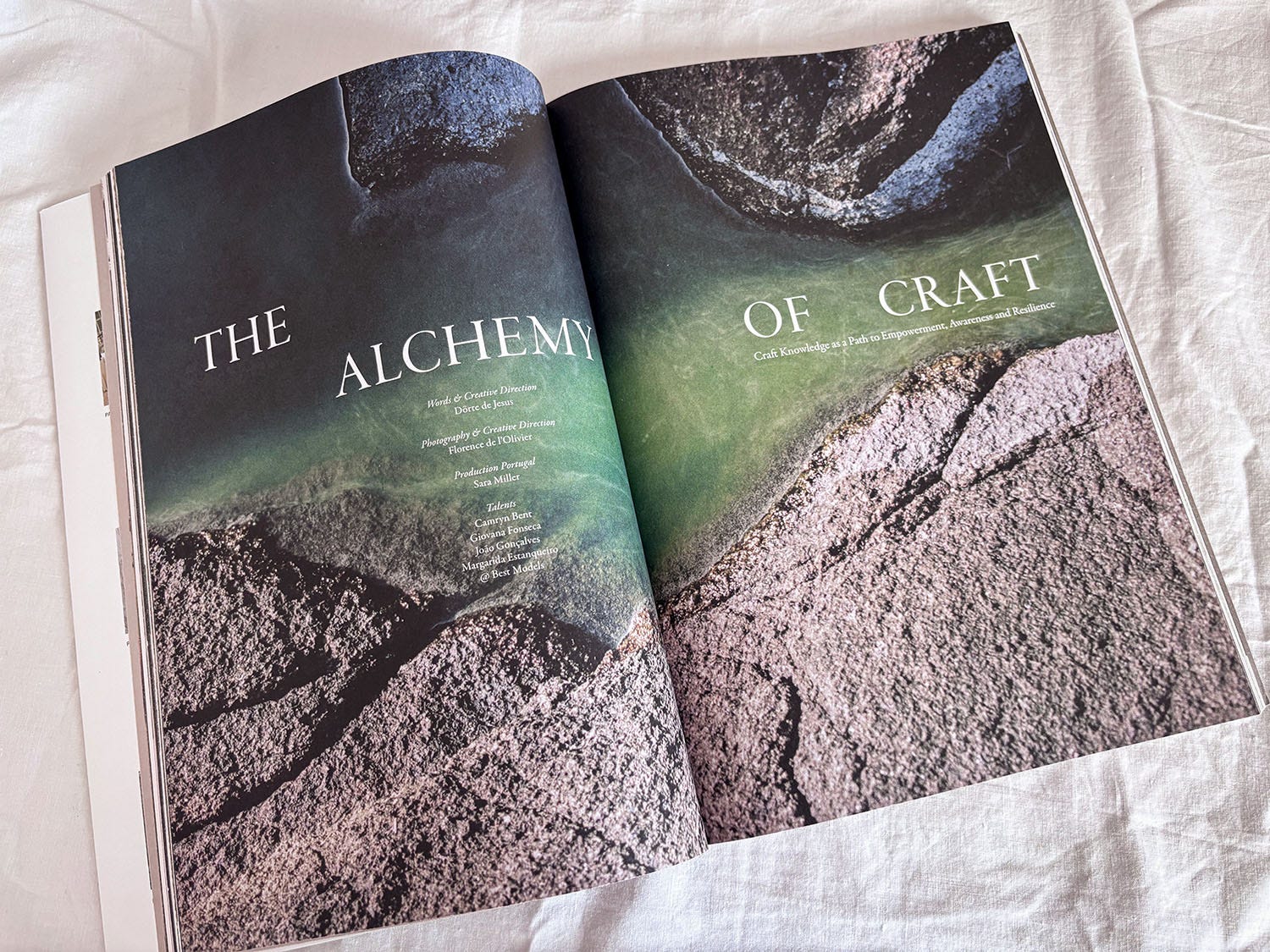
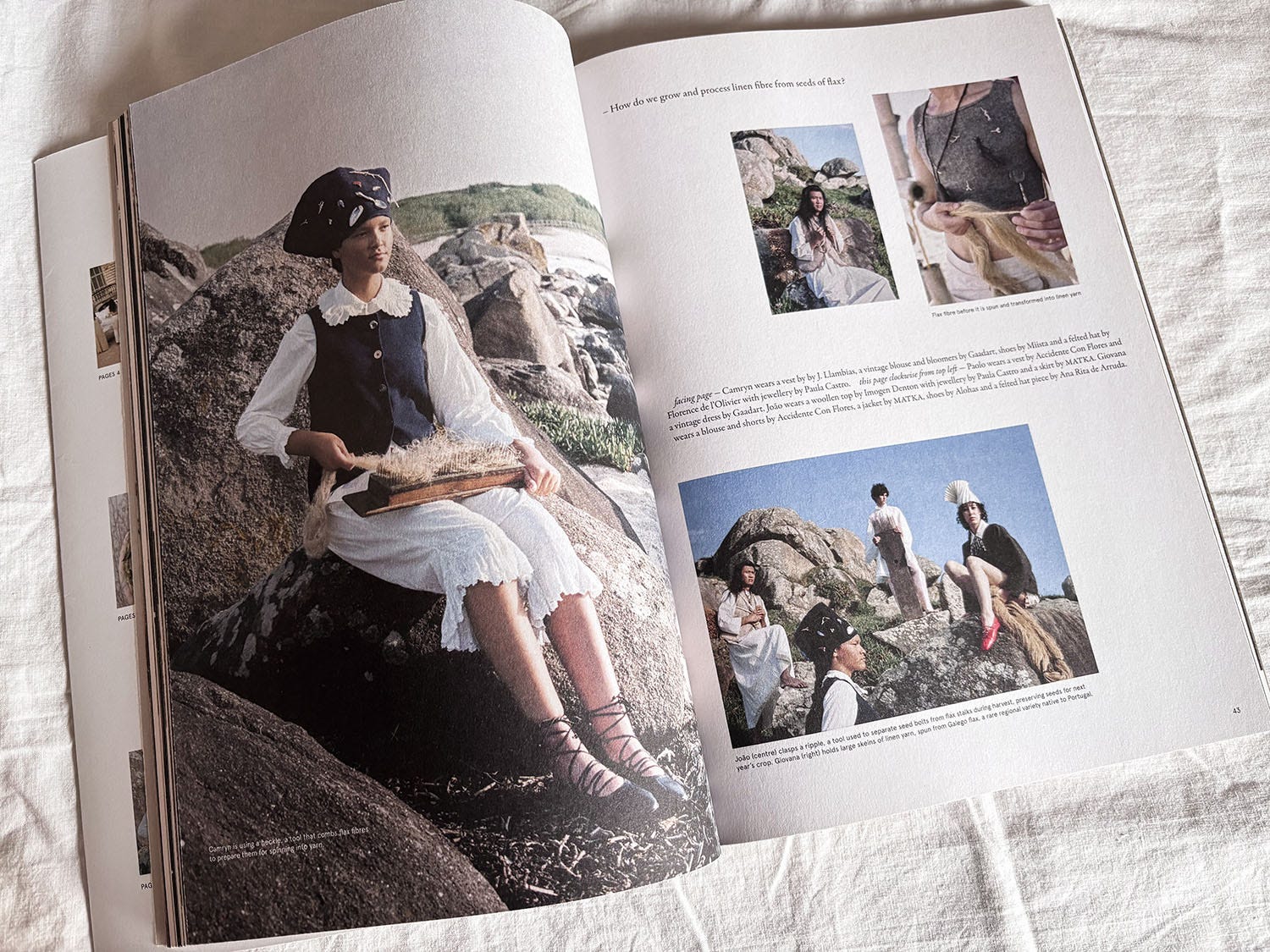
The Lissome No. 5: Rise Up Rooted Like Trees
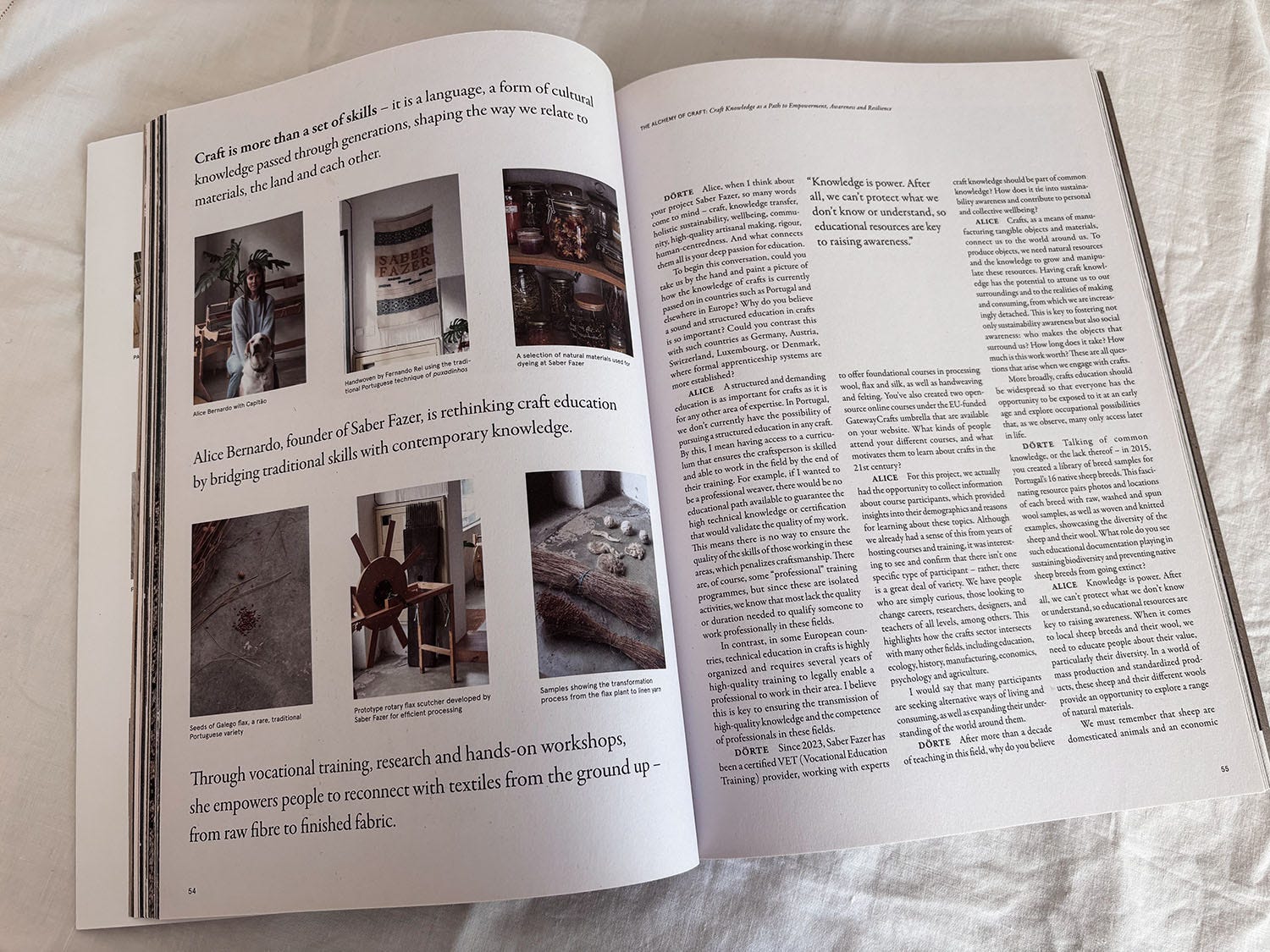
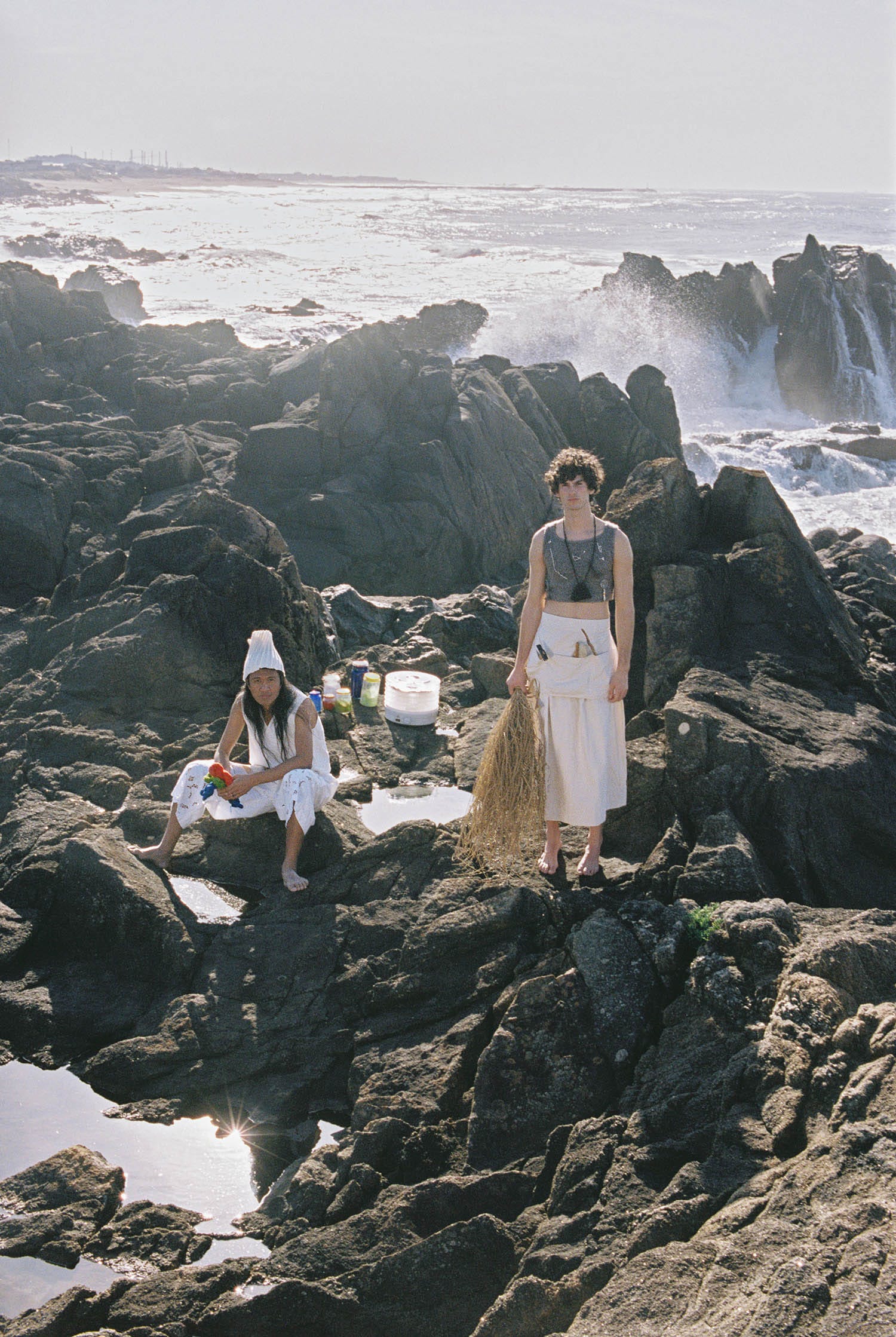
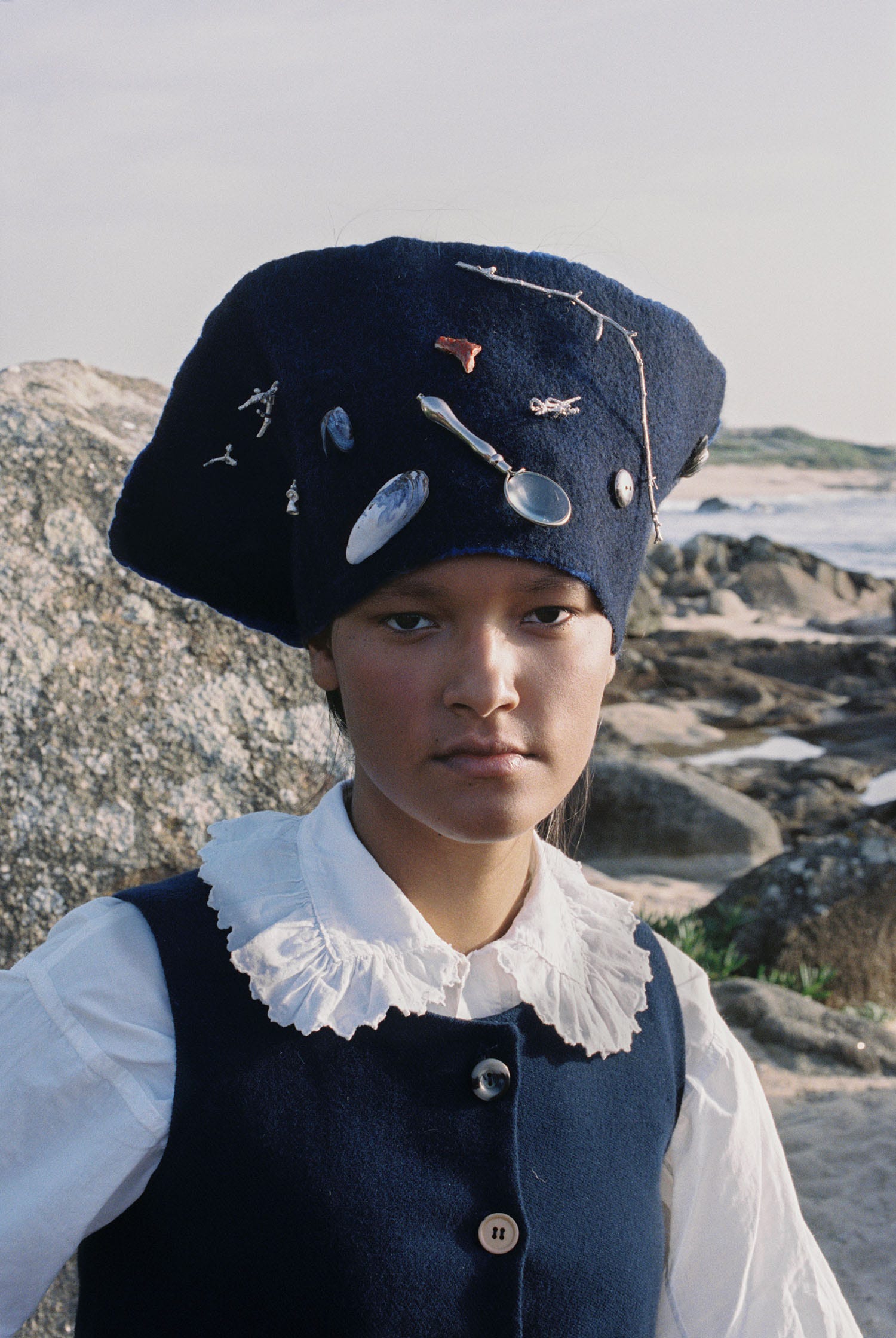
My plan was not only to interview Alice, but also to create a fashion editorial informed by her work and worldview. When the idea received EU funding through the Culture Moves Europe programme, photographer Florence de l’Olivier and I were able to spend two weeks in Porto on a research and production exchange with Alice.
Alice’s passion lies in rigorous craft education and in bridging traditional skills with contemporary knowledge. Through vocational training, research and hands-on workshops, she empowers people to reconnect with textiles from the ground up – from raw fibre to finished fabric. For her, knowledge is power: “Knowledge is power. After all, we can’t protect what we don’t know or understand, so educational resources are key to raising awareness.” She is equally passionate about relocalising craft, arguing that we need to bring textile and food production back to Europe, foster small- and medium-scale local value chains, and transition towards agroecological practices.
This commitment is something Alice shares with Miguel Barbot, her life partner and partner in business, with whom she founded Barbot Bernardo, the “mothership” of Saber Fazer and their design studio, Ofício. Together, they follow a vision for a world shaped by local production chains, ethical and sustainable organisations, and communities committed to climate transition.
During my stay in Porto in 2024, Alice and Miguel introduced me to the European Creative Hubs Network (ECHN), of which they are both active members, and warmly encouraged The Lissome to join. The peer-led network brings together all kinds of different creative hubs across Europe and neighbouring countries with the mission of strengthening their creative, economic and social impact. I followed their recommendation, and this is the reason why I found myself back in Porto a year later. The ECHN offers peer learning exchanges for its members, in which one hub visits another to exchange best practices, share knowledge and learn from one another – and also share their findings with the public.


Miguel and I decided to embark on a week of joint learning centred around two intertwined areas of exchange. On one hand, we explored future editorial collaborations between our two hubs, developing initial concepts for a joint event and editorial project and discussing how publishing can serve as a bridge between material production, cultural knowledge and public engagement.
On the other hand, Miguel, who also works as a consultant supporting small creative businesses and organisations, mentored me around questions of organisational sustainability and values-based business development. Together, we reflected on the challenges facing independent cultural iniatives and explored possible pathways for strengthening the long-term resilience of The Lissome.
During our conversations, Miguel reflected on how much of Porto’s creative ecology has been shaped through scarcity, resilience and the necessity of working together. Porto, he explained, is a city used to “punching above its own weight” – historically industrial, both bourgeois and working class, with a long tradition of small-scale production and interconnected local economies. Although it feels intimate, it actually sits at the centre of a dense network of neighbouring towns and communities.
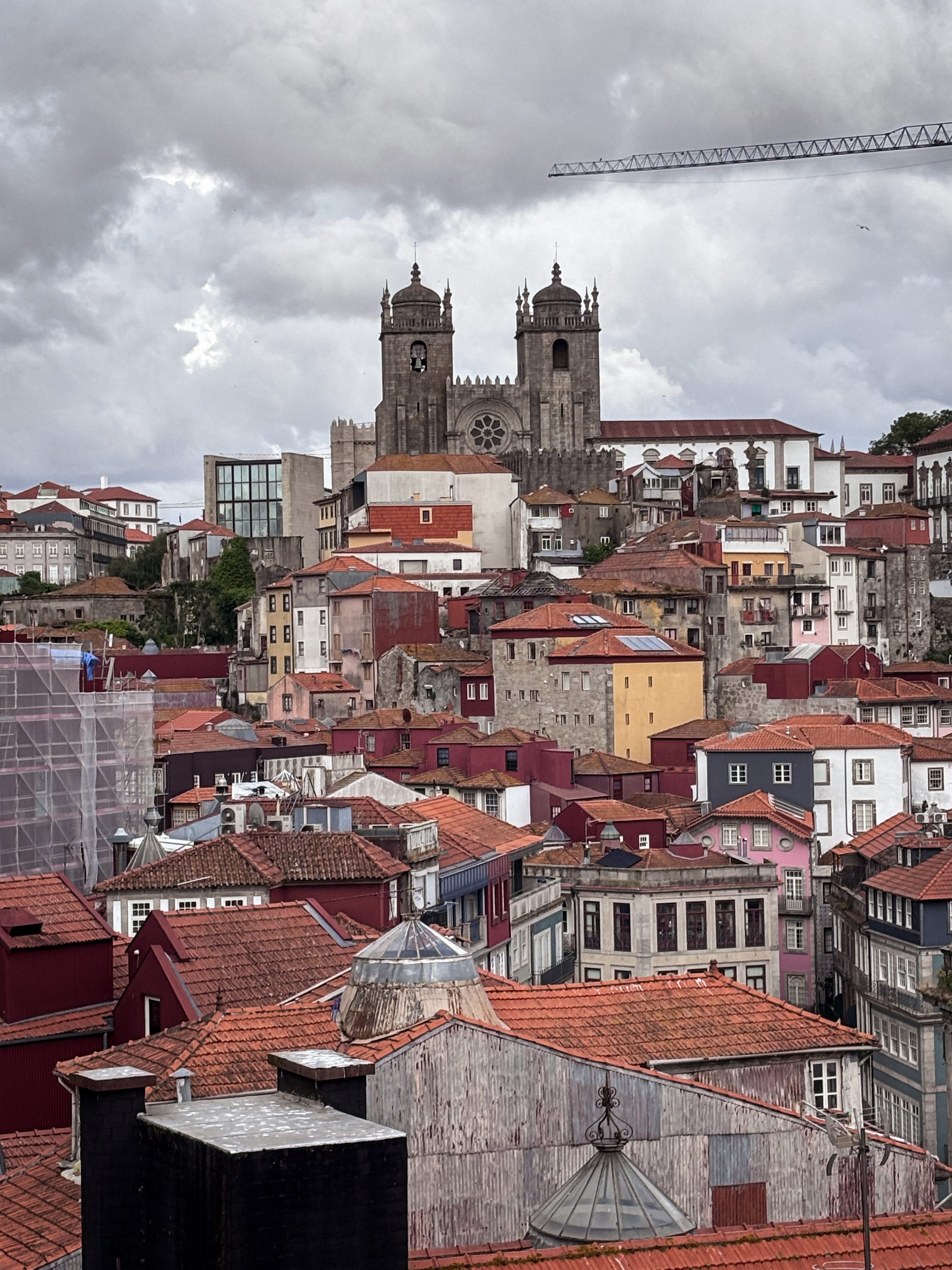
During the 1970s and 1980s, much of the historic centre emptied as corporations relocated to Lisbon and families moved to the suburbs. What remained was space: affordable rents and abandoned buildings that, together with a thriving university culture following the 1974 revolution, enabled a strong underground culture, from music to visual arts. From the early 2000s onwards, Porto gradually became more international. Tourism, cheap flights, cultural investment and a growing visibility attracted a new generation of creatives. Studios, bars, workshops and cultural spaces opened, while the city developed a tightly woven creative ecosystem.
Miguel spoke passionately about how much this ecosystem depends on proximity and everyday encounters, and I got to experience it during my time there. “Face-to-face is fundamental for most of our work,” he told me. Casual conversations in the studio, bumping into friends, or meeting someone over a beer can unexpectedly become the beginning of a collaboration or a new idea. Porto, he said, has become a “glocal” city: locally rooted, yet connected to wider international networks and welcoming to newcomers.
But, like many cities across Europe today, Porto is also facing many pressures. After years of crisis, from austerity measures following the financial crisis of 2008 to Covid to the repurcussions from the wars in Ukraine and Iran, the city is now grappling with a speculative housing crisis, much like so many other urban centres worldwide. Affordable rents that were one of the conditions that allowed experimentation and grassroots culture to flourish, and, in turn, to revitalise the city, have largely disappeared. Rising property prices and investment-driven development are making it increasingly difficult for artists, makers and small organisations to remain in the city centre.
I arrived in Porto on a Sunday afternoon after taking the scenic bus route from Lisbon, where I had spent a few days with a dear friend and visited the gorgeous gardens and ceramics collection of the Albuquerque Foundation in nearby Sintra.


Our exchange began on Monday morning, and my flat for the week was conveniently located just a comfortable 20-minute walk from Miguel and Alice’s studio, and each day began with a joyful sunny morning stroll.
Our week unfolded through work sessions between Miguel and me, interwoven with visits from and of other creatives and local initiatives whose work connected to the themes we were exploring. On Thursday, we opened up the conversation to the public through a roundtable, which invited us to think about how craft, science, publishing and storytelling can work together to support more resilient ways of making, sharing knowledge and building culture.
For the conversation, we invited Vai Vem, a Porto-based independent publisher, and Paula Nabais, a professor and researcher in conservation and restoration whose work bridges historical textile knowledge and contemporary sustainability. Paula currently leads the ERC-funded SCARLET project, which studies historical natural textile dyeing techniques from the 15th to the 18th centuries and reconstructs traditional recipes to develop sustainable solutions for today’s textile industry.
Together, we reflected on questions of responsibility and integrity in storytelling, on how we tell stories about craft and heritage without romanticising or trivialising them by reducing complex realities to nostalgic narratives? And how do we remain truthful to the communities and craft practices we intend to represent?
The themes we touched upon during the roundtable continued into a longer written conversation afterwards, in which Miguel expanded on some of the questions we had begun exploring together. He spoke about what he calls the “metropolitan gaze,” a tendency to romanticise rural labour and traditional practices while overlooking the precarious practices that can shape them. The people and communities we seek to represent, he argued, are often far more similar to us than the idyllic nostalgic ideas we project onto them.
For Miguel and Alice, the question is not how to preserve the past unchanged, but how knowledge can be updated and made meaningful in the present. Through Saber Fazer, they focus on rigorous research, technical education and creating new pathways for local craft economies to thrive – what Miguel describes as building “future ecologies”.
At the same time, Miguel emphasised that storytelling itself carries responsibility. “Respect their labour and do your homework,” he said. Understanding the realities, skills and systems behind craft practices matters for truthful representation and for contributing to their long-term economic viability.
We also reflected on the current revival of craft and folk culture, something Miguel sees as a very positive thing, especially in communities that for decades undervalued their own traditions and are now rediscovering their identity and creating new interest from the outside. Yet he also pointed to an ongoing challenge: while there may be growing appreciation for craft, consumers often struggle to understand the true cost of skilled labour, time and quality.
Particularly in Portugal, where, as Miguel remarked, there was no equivalent of an “Arts and Crafts” movement, many craftspeople and makers still lack the recognition and leverage to properly value their work. This is where small independent publishing can play an important role: creating visibility, fostering deeper understanding and helping build new cultural circles around craft and small-scale making. As he put it, “There is plenty of beauty and craft in the real, contemporary world; we don’t need to delve into a good-old-times rural utopia.”
But these questions of value and long-term viability do not only concern craftspeople. They echoed through many of our conversations throughout the week, returning us to a shared challenge faced by many small-scale, values-led practitioners and initiatives: how do we remain committed to quality, ethics and slower ways of working while still making a living in systems that reward quantity over quality and profit over care?
The exchange with Miguel was very insightful for me in this regard. He and Alice had just done this – they had found a way to support their work reliably long-term through a mix of different income streams that meaningfully support one another, ranging from for-profit work with aligned clients through their design studio, to a shop selling specialised equipment such as hand looms, spinning wheels, yarns, fibres, needles, spindles, wools, silks and dyeing plants, to longer-term institutional funding for their educational and community projects.
This led us into conversations about The Lissome and what a financially sustainable future for the publication might look like without compromising its editorial independence, quality or values.
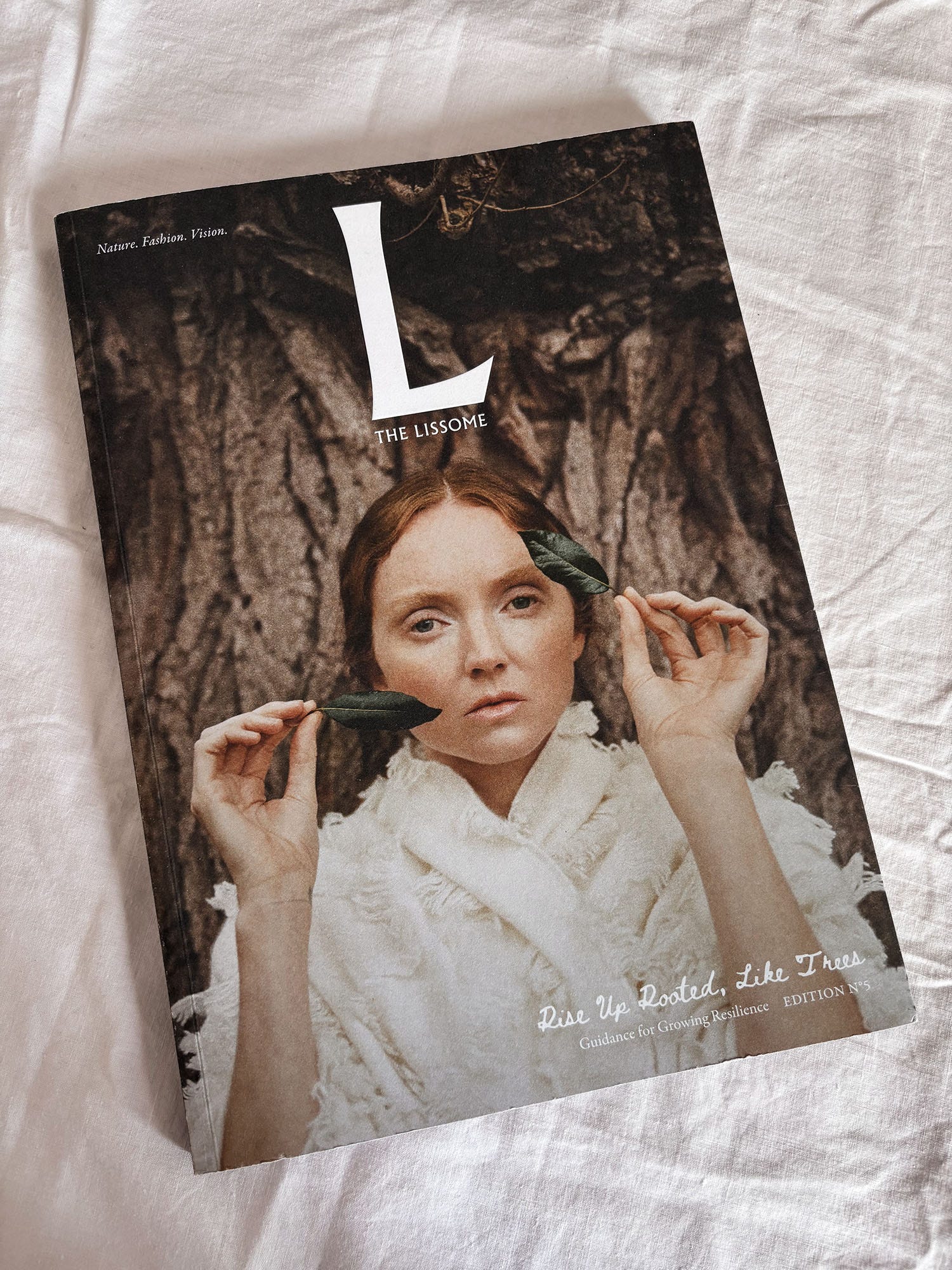
The Lissome also began as a personal inquiry ten years ago, initially as a simple blog, spurred by my curiosity to explore the deeper systems shaping fashion, culture and ecology. The move into print in 2019 was made possible through a crowdfunding campaign that funded the printing costs for the first edition. Since then, The Lissome has remained a grassroots project, without outside investment or institutional backing, with each issue largely depending on finding enough funding to make the next one possible. Like many independent cultural initiatives, it has survived through an unshaken belief that this kind of discerning, systems-oriented storytelling matters, and through a deep love for the beauty, meaning and possibility it brings into the world.
Inspired in part by the wider ecosystem Miguel and Alice have built around Barbot Bernardo, our conversations began to open up new possibilities: whether a similar kind of “mothership” could gradually emerge around The Lissome – where the annual print publication is supported by a broader ecosystem of interconnected work, such as expanded publishing formats, institutional funding for cultural work, and a studio practice focused on editorial direction, publishing, magazine design, art direction and visual storytelling.
Miguel introduced me to several examples in Porto of how small independent actors have built infrastructures that make meaningful cultural possible long-term. One example was the Bombarda arts community that began in the 1990s, when a group of young gallerists decided to open galleries in the same neighbourhood, and then started working together. This created visibility and power in numbers. To this day, the district hosts collective openings every nine weeks, the Bombarda Collective openings, which attract people from all over the region and strengthen a sense of cultural community.
More recently, this spirit of collaboration evolved into the Bombarda Creative District Association and a shared effort to strengthen the neighbourhood’s wider creative ecosystem. The association emerged through the Digital Neighbourhoods programme, funded by Portugal’s post-Covid recovery fund (PRR), at a moment when many small businesses were still reeling from the effects of the pandemic.
Rather than supporting isolated actors individually, the initiative created a shared structure through which almost 200 local entrepreneurs, cultural spaces and creative businesses could organise collectively and gain greater visibility. Among its outcomes was a digital map of the district, making Bombarda’s many galleries, studios, workshops and independent initiatives easier to discover, while also helping strengthen connections between local actors themselves.


But beyond visibility, what struck me was the wider ambition behind the project. As Miguel explained, the association gradually became a way of building something many small independent actors struggle to create on their own: shared strategy, professional support and a stronger collective voice with political influence when advocating for the needs of creative businesses and the neighbourhood more broadly. Yet, as he emphasised, “it is communal at its core.”
Bombarda is only one example of how creative life in Porto organises itself collectively. Today, the district is home to a dense network of galleries, makers, publishers, studios and small businesses, many of which can now be explored through a shared digital map developed through the neighbourhood fund initiative. But creative life and cultural experimentation are found throughout the city in many different forms. During my week in the city, I got the chance to visit a number of creatives working in different fields, from craft and material knowledge to circularity and publishing.
On Monday afternoon, Margarida Antunes and Pedro Mota from Vai Vem, a Porto-based publishing house focused on design and culture, came to see us in the Saber Fazer studio. We exchanged learnings on the realities of running an independent book publishing house versus an independent magazine initiative, and recognised many shared challenges around editorial independence and financial sustainability.


The following afternoon, I set off on a small excursion to visit a number of makers and designers. First, I stopped by the shop of GUR by designer Célia Esteves and the studio of artist Michelle Nunes, before ending the day over a galão and homemade pear cake with fashion designer Sara Miller.


At GUR, designer Célia Esteves welcomed me into her shop and studio, where a beautiful selection of handwoven rugs was on display alongside a special exhibition of pieces inspired by the eco-educational children’s music and book project Mão Verde(“green thumb” in English). Through GUR, Célia collaborates with artists and illustrators to reinterpret the traditional Portuguese handwoven rug, working with the same techniques but bringing in new forms, colours and visual languages. During my visit, she showed me different weaving techniques in an old book on Portuguese crafts and introduced me to her small ergonomic handloom that she purchased through Saber Fazer and on which she creates smaller woven tapestries in the shop.


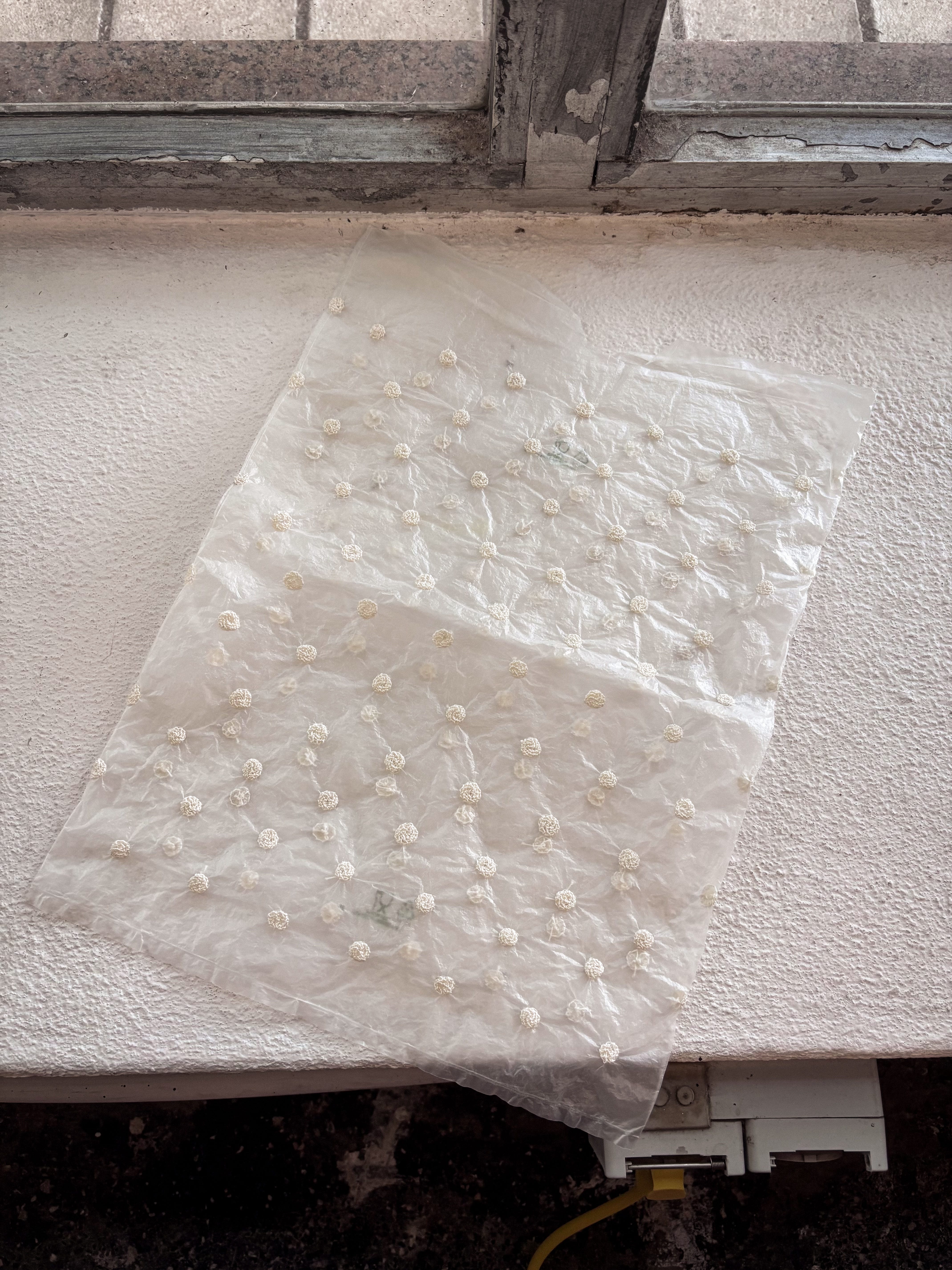
Michelle Nunes is a multidisciplinary artist from Phoenix, Arizona, who moved to Porto during the pandemic. Working across textiles, objects and sculpture, Michelle combines intricate hand-beading and hand-embroidery with clothing and everyday materials, such as simple plastic bags, transforming them through slow, highly detailed craft. Seeing these works in person, I was moved by the contrast between the ephemerality of the original object and the care and time invested into it through her handwork. There was something deeply tender in the way these throwaway materials were elevated and lovingly attended to.


I had first come across Michelle’s work through her collaboration with Lisa and Esuga from Abaya, currently featured in the Book of Kin with their beautiful collection of footwear. Abaya had collaborated with Michelle on a special hand-embroidered collection of T-shirts, which you can find on their website and read about in our conversation on Substack.


Meeting Sara Miler closed a small circle. Sara had supported our Porto photoshoot through helping us with production and location scouting. After years of working as a fashion designer in Barcelona, she moved back to Porto and started Refresquito, creating beautiful everyday objects from discarded materials: balls made from leather offcuts, notebooks from old wallpaper and found paper stock, and playful arrangements that she continuously transformed into ever-changing window displays. More recently, Sara has begun working with the Porto municipality on circular design initiatives, helping develop new approaches to working creatively with discarded materials through collaborations with schools, artists and local institutions.
On my final day in Porto, before catching my flight home, I happily reunited over lunch with artist, maker and art educator Ana Rita de Arruda, whom I had first met during our stay in Porto in 2024. A long-term collaborator of Saber Fazer, where she regularly teaches specialised felting workshops and shares her extensive technical knowledge, Ana Rita had welcomed me and Florence into her studio, introduced us to her felting practice and exploration of wool as a sculpting material, and generously lent some of her pieces for the photo shoot.


Throughout the week, a book I had read several years ago, Local Is Our Future by Helena Norberg-Hodge, kept coming back into my mind. For Helena, localism is about rebuilding resilient and thriving local economies and communities that are rooted in relationships, reciprocity and a sense of place. This includes strengthening local production and culture as well as decision-making powers, collaboration and knowledge exchange within the local communities. As an alternative to the large-scale corporate structures and economic logics that dominate our time, she argues that diverse, human-scale and place-based economies are much better able to meet our human needs – for feeling that we belong, that we care and are cared for, for having a voice and a say, and can play an active and meaningful part in shaping our daily lives and immediate surroundings.
Much of what I encountered in Porto helped me understand in very concrete ways what Helena means. Throughout the week, I met people building small and diverse forms of infrastructure around meaningful work: collaborative neighbourhood initiatives, educational programmes and workshops, shared workspaces, independent publishing and local production. But at the same time, Porto also showed how the pressures of property speculation and rapidly rising rents were now threatening such models and initiatives, and how political intervention and legal frameworks that protect local communities were desperately needed. Because after all, if cities benefit economically from a rich cultural life that attracts tourism, then shouldn’t meaningful support also flow back to the people, initiatives and small businesses that make these places distinctive and worth inhabiting, in the first place and for the long term? Isn’t that just common sense?
But, as Miguel reflected, the “creative utopia” many of us might imagine does not simply exist on its own. Meaningful cultural work comes to life and survives because people come together, organise and patiently build structures that can sustain it over time. “Change takes time,” he said, “but you, as a collective, are nothing without the numbers to enforce it.” It’s a good learning to take home with me: yes, localism is about proximity and place, and this is what makes real relationships possible, but it is also about the continuous and loving work of building these relationships and shared infrastructures that make forms of mutual support strong enough to face uncertainty and change.
It was a beautiful and memorable week, guided by an incredible host and many joyful encounters. I’d like to say a huge thank-you to Miguel, Alice and the whole team of Barbot Bernardo, and all the beautiful souls that I met throughout the week – and a huge thank you to the European Creative Hubs Network for making this learning exchange possible. If you’re curious, I really recommend exploring their map of creative hubs. They are a great network and you might discover some inspiring places close to your home.
Now I’ll leave the last word to Miguel:
“Good things take time. Focus, be patient, do your work with purpose, and understand your role, your priorities and the impact of your decisions. We are not interested in quick wins, but in building a structure that can support sustainable, impact-positive and meaningful growth.
I think this logic is contrarian to the tech-capitalistic way. Remember Zuckerberg’s ‘move fast and break things’ motto? I guess craft, as a way of thinking, is the exact opposite: ‘move slow and build things’.”
I hope you enjoyed travelling through Porto with me.
Sending warm wishes,
Dörte xx
Further Explorations:
A huge thank you to the European Creative Hubs Network (ECHN) for making this learning exchange possible through their ECHN P2P initiative.
European Creative Hubs Network (ECHN), https://creativehubs.net
Explore the network and map of creative hubs across Europe.
Bombarda Creative District Digital Map, https://bombarda.pt/en-US/home
A way to discover the many galleries, studios, makers and initiatives that make up Porto’s Bombarda neighbourhood.
Barbot Bernardo, https://barbotbernardo.com
Miguel and Alice’s wider ecosystem spanning design, craft, education and consultancy.
Saber Fazer, https://www.saberfazer.org/home
Vocational education, research and workshops focused on natural textiles, fibre production and craft knowledge.
Vai Vem, https://vai-vem.pt/en-1
Independent publishing house dedicated to design and culture.
Abaya, https://abaya.life
Footwear and clothing brand rooted in regenerative natural materials and a philosophy of treading softly.
GUR, https://rugbygur.com
Contemporary Portuguese handwoven rugs by Célia Esteves.
Michelle Nunes, https://michellegomesnunes.com
Multidisciplinary textile and object-based practice.
Sara Miler / Refresquito, https://www.instagram.com/refresquito/
Playful everyday objects made from discarded materials.
Ana Rita de Arruda, https://anaritadearruda.com
Textile artist and educator specialising in felt and wool.
Helena Norberg-Hodge – Local is Our Future
On localisation, interdependence and rebuilding resilient local economies.
www.localfutures.org/publications/local-is-our-future-book-helena-norberg-hodge/
→ Continue the Journey:
Many of the questions that accompanied me through Porto also sit at the heart of The Lissome No. 5: Rise Up Rooted, Like Trees. The current issue is available here.