

Everything is Alive
An animist perspective on clothing


Hello precious people,
I’ve just returned from Porto, where I spent a week on a peer-to-peer learning exchange with Barbot Bernardo, a creative studio and vocational education provider working across urban transition, agroecology, sustainable production and small-scale manufacturing, supported by the European Creative Hubs Network, of which we are both part.
During the week, I met designers, researchers, publishers and organisers actively building local initiatives - from neighbourhood networks and shared learning spaces to small-scale production and craft practices. Many of our conversations revolved around what allows local cultures and communities to emerge and endure. I came back with many thoughts (and many notes), and I’m looking forward to sharing more in the June newsletter.
For this month, Liz has prepared an essay on the aliveness of objects, and what our relationship to clothing might teach us about consciousness, matter, and the curious ways we become attached to the things around us.
I hope you enjoy reading.
Sending lots of beautiful sunshine, this month from Berlin,
Dörte xx
Everything is Alive.
An animist perspective on clothing.
By Elizabeth McLellan
What defines the nebulous line between the living and the inanimate, between consciousness and oblivion? Perhaps there is no stable distinction at all. Over time, spirit migrates into matter, and matter rises and congeals within us, like capillary action, where the fat in a soup forms a hardened layer on top. Matter weighs us down, tethering us to this life and containing our beings; keeping the remaining water inside us from simply slipping out and become one with the primordial soup of the ocean.
This is, in fact, an article about our relationship to clothing. Yet it is also about the nature of the universe, the connection between matter and spirit, and the societal ills that plague us. I hope, with this article, to briefly illuminate just how interlinked they actually are.
We are entangled beings. Physicist Karen Barad coined the term Agential Realism: arguing that things emerge through their “intra-actions”, as opposed to an interaction where things simply exist first, then come into contact. Intra-action means the boundaries and identities of beings are constituted through the encounter itself. In this view, matter itself takes on agency, participating in the becoming of reality.
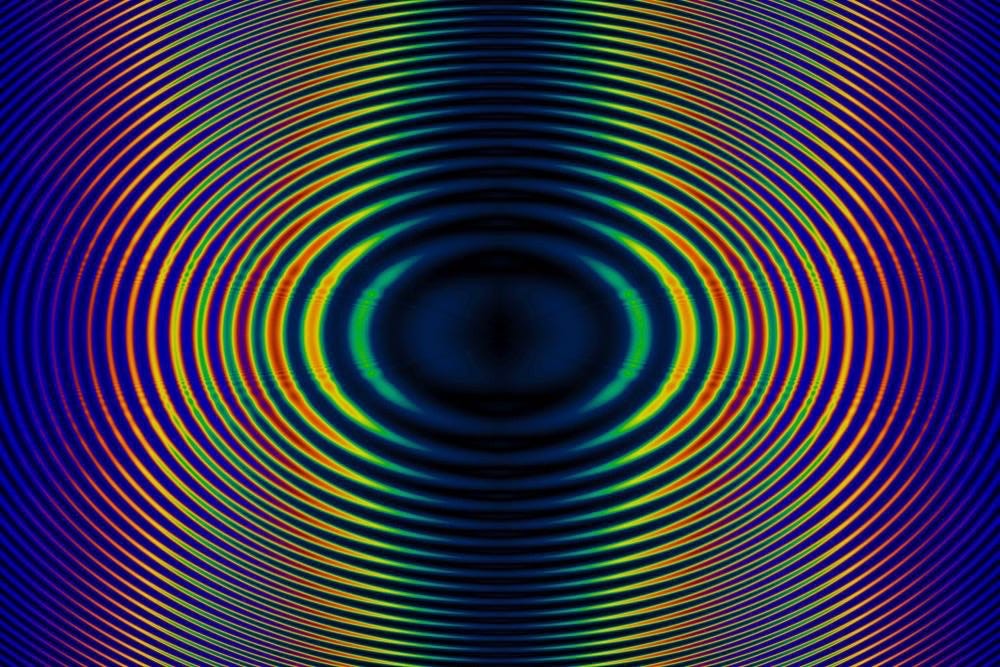
Her view was formed through a complex web of disciplines, mixing quantum physics, feminism, critical theory, natural sciences. One of the tools she used to demonstrate this phenomena was diffraction: whereby waves of particles overlap, bend, interfere and produce new patterns. As Karen writes, “Diffraction is a material practice for making a difference,”1 a way of understanding the world not as separate entities reflected back at one another, but as forms continually produced through patterns of interference, entanglement, and relation.
In this view, it’s impossible to cling to a neat definition between animate and inanimate, in any meaningful way. Part of what is so powerful about an animist relationship to objects is that it posits that everything is, in fact, full of life. What an exciting, vibrant way to go about the world!
On the flip side, it opens us up to an understanding of how intimately we are related to death. We are also matter, and at a certain point in our journeys we will lose this consciousness and become distributed as matter again. The lines between living and dead, consciousness and object are receptive, impressionable and osmotic. The world is constantly fluctuating between these boundaries.
Love, then, is what teaches us that consciousness and emotional significance are not exclusive to humans. Once we experience attachment to animals, plants, objects or spaces, the strict boundary between subject and object begins to dissolve.
I have felt this in the powerful ways I relate to my home space, as an extension of my self. Sometimes, when I lose a favourite sock it feels as if one of my limbs has been ripped from me. I’m well aware this sounds a tad extreme, as my husband can attest to, yet I can’t help but feel there is some spiritual truth to the feeling. Things are supposed to be our vestiges of permanence, and when they fail us at this task, by getting caught in the drier, it can feel like everything is slipping away into the void of time; of change; of impermanence.
